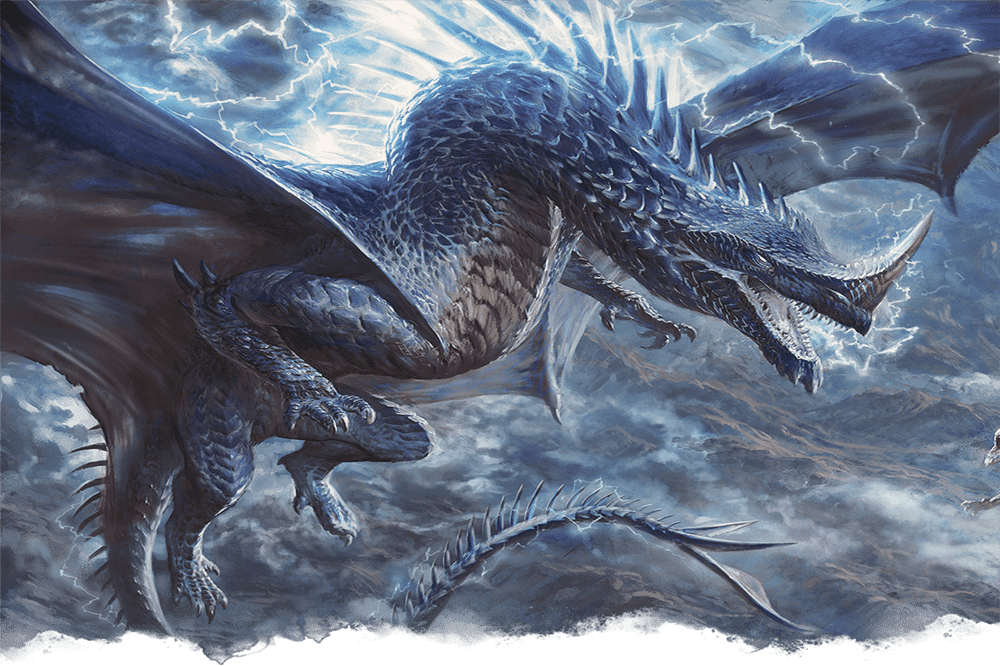
Dragons are easily the most iconic creature in all of Dungeons & Dragons history - making up one half of the tabletop RPG’s name and appearing on the front cover of multiple versions of rulebooks. It’s unsurprising that dragons play such a central role in this tabletop roleplaying game, seeing as they’ve been a part of fantasy myth for centuries, across numerous cultures.
But how are dnd’s dragons unique? How many different dragons are there? What makes dragons a particularly dangerous D&D monster? Are all dnd dragons evil? Is there an ultimate D&D dragon?
What were the first dragons in DnD?
Unsurprisingly, dragons have been a part of Dungeons & Dragons since the very beginning of the worldbuilding in the fantasy TTRPG. With the game’s lore taking so much inspiration from texts like JRR Tolkien’s The Lord of the Rings - which, in turn, was heavily inspired by Anglo-Saxon and Medieval era stories like Beowulf and Gawain and the Green Knight - dragons had to take a central role in Dungeons and Dragons’ world and identity.
The first time inclusion of Dragons in D&D arrived in the original box set released for the TTRPG back in 1974. The Dungeons & Dragons White Box Set featured the first five dragon types created for the game, including the now immensely iconic Red Dragon. Though the Red Dragon was introduced alongside four other types of dragons - Blue, White, Black and Green - it has since become the poster-child for Dungeons and Dragons itself.
These five dragons were soon followed up by the Metallic dragons in 1975 with the Greyhawk Campaign, which introduced the Copper, Brass, Bronze, Silver and Platinum dragons. The gold dragon was also added to D&D’s roster of draconic creatures around this time.
What makes the DnD dragons different?
Older editions of Dungeons & Dragons were a lot more stringent about its moral alignment system, which categorised certain monsters, organisations, gods and even player classes into different schools of morality - which would determine their behaviour, as well as certain gameplay elements and where they’d go when they left the mortal plane.

Originally, all dragons besides the gold dragon, were classified as evil. However, with the release of Advanced Dungeons & Dragons (AD&D), dragons were sorted into different moral alignments depending on their type: with Chromatic Dragons (the first five) being universally evil, whilst Metallic Dragons were good, and the newly introduced Gem dragons were levels of neutral.
Eventually, the release of D&D Fourth Edition saw these moral alignment categories for dragons being mostly removed, with the potential for Chromatic Dragons to be good and Metallic Dragons to be bad - though some common behaviours remained consistent amongst certain dragon types. Regardless of their type, all dragons have a fondness for treasure, though the more evil dragons tend to intensify and extend their greed beyond simply owning some nice gems.
The other major way the dragons in DnD differ from each other is in their separate abilities. Each type of dragon has access to a certain kind of breath power - for example, whilst Red Dragons breathe fire, White Dragons breathe cold breath - as well resistances to different damage types. The dragon types will also have varying levels of intelligence, with Black Dragons being particularly cunning and White Dragons being quite dim in comparison, as well as preferences and unique abilities: like the Green Dragon’s innate spellcasting powers and Blue Dragons’ combat flight prowess.
What makes DnD’s dragons special?
The world of Dungeons and Dragons has had over 50 years of development, enabling simpler concepts like the introduction of dragons to become far more fleshed out. This is probably what makes D&D’s dragons special in their own right, as the creature has been allowed to be iterated on and expanded throughout the entire tabletop RPG’s lifetime.

Firstly, you have the wide variety of dragon types. From the introduction of the Metallic and Gem Dragons - including adjacent colour types - to the expansion into the Chinese inspired Lung Dragons, the Faerie Dragons, numerous undead dragon types and even an entire family of ‘unofficial’ dragon creatures: such as Drakes and Wurms. The dragon has transformed and shifted to fit the game’s myriad campaign settings and supplements, producing some really interesting versions as a result.
Secondly, you have the bizarre and extensive lore surrounding dragons within the fantasy RPG world. For instance, the basic setting of D&D - the Forgotten Realms - is comprised of several different planes, with the mortal plane being the one that many common humanoid species like elves and humans live on - the plane that preceded this, the original plane, was created by a primordial dragon god named Asgorath or Io. This dragon god’s physical form was then split into two: becoming the iconic dragon gods of the benevolent Bahamut and the tyrannical Tiamat, who are worshipped by humanoid species and served by other dragons.
Dragons have played such a central and strange role within the world of Dungeons & Dragons, to the point wherein they have an entire playable species derived from them: the dragonborn, whose ancestors were born from dragon eggs. Weirdly enough, dragons are capable of mating with literally any species, with there being dragon/human/elf/dwarf etc… hybrids - thanks to the fact that dragons can also take a humanoid form.
What makes dragons so dangerous?
Dragons aren’t just dangerous because of their immense size, there are actually a number of reasons found in the Monster Manual, as to why you shouldn’t attempt to fight a dragon unless you’re extremely experienced and prepared.

Obviously, their large size and tough scales mean that their health pools are often enormous and their AC (or armour class) is usually very high, alongside the obvious danger of their crushing and swiping attacks. Dragons are also - usually - very clever and have very long life spans, giving them plenty of time to gain experience. All dragons have some form of breath attack and damage resistance/s, which makes it hard to hurt them and easy to kill you.
Certain dragons are more dangerous than others, with each major category having their top dogs: with the Red Dragon easily dominating the Chromatic kind, Gold being the most dangerous Metallic Dragon, and Amethyst being the Gem Dragon you don’t want to mess with. Within these categories, you also have to consider that dragons experience different stages of their life, with each subsequent stage increasing the dragon’s power.
Ancient dragons are especially terrifying, having access to all the standard dragon abilities, alongside being able to use legendary actions: which can be used after any other character’s turn and are refreshed once the dragon’s next turn rolls around. If you’re truly stupid enough, you could even take on a Great Wyrm, which is the last and nastiest stage of a dragon’s life cycle.
Then there are the Primordial Dragons like Tiamat, who is essentially a god and has the abilities to match. Tiamat is immune to all spells under 6th level, can terrify anyone just by being near them, can regain health every round and can take a whopping five legendary actions in a turn - most of which include breath attacks from one of her several heads.

What are the weirdest dragons?
Dungeons and Dragons has several especially weird dragons in its lore collection, here’s some of the strangest:
Dracoliches: Dracoliches are a form of undead dragon whose souls are attached to a phylactery, or a container that protects and extends the dragon’s life. Dracoliches are actually capable of possessing any form, though they often prefer their original ones: even if they’re rotten.
Ghost Dragons: These are powerful spirits that materialise as a result of a dragon being killed and their horde being stolen, with their restless spirits being unable to settle until their riches are restored.
Elder Brain Dragons: An Elder Brain Dragon is the result of a dragon being taken over and dominated by an illithid elder brain, giving these already dangerous creatures advanced psionic powers.
Shadowfell Dragons: The Shadowfell Dragon is a dragon that has been transformed by living in an area controlled by the Shadowfell, weakening them but gifting them shadow breath powers.