Worldbuilding games can serve as an excellent source of inspiration and guidance for crafting your very own roleplaying game world and/or campaign.
While most tabletop RPGs do include elements of worldbuilding in them, their main focus is on the player characters telling a story. By comparison, worldbuilding games are entirely focused on the process of creating the setting - or more specific elements - rather than playing in it, with players telling stories through more esoteric means: like a timeline of events, a building on a map, and the evolution of a language.
Playing worldbuilding games can help you learn how to create better fantasy worlds, and maybe even enable you to make elements to put into your world or campaign wholesale.
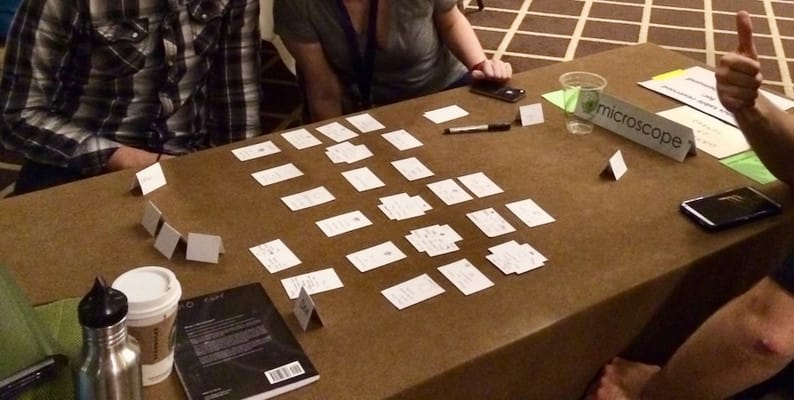
Microscope by Ben Robbins
Microscope is a roleplaying game of epic histories, wherein players are able to create a timeline of events that tells a story.
This game is played by creating a timeline of history, which will take place between a starting catalyst event and a final ending event. The goal is to show how this world changed within this time, and what led to this last event taking place.
You can devise the events of Microscope in any order, even working back from certain moments if that makes more sense. When doing this, you’ll need to consider what needs to happen in the past for your future events to be justified. For example, if the ruler of your world is assassinated sometime in the future, you’ll need to imagine what led to this event occurring? How did this ruler end up so hated that they were targeted? How did things escalate to assasination?
Microscope is a great worldbuilding game for learning how to make a comprehensive and rich timeline for your world. You could even try and create the history for your world in Microscope itself.
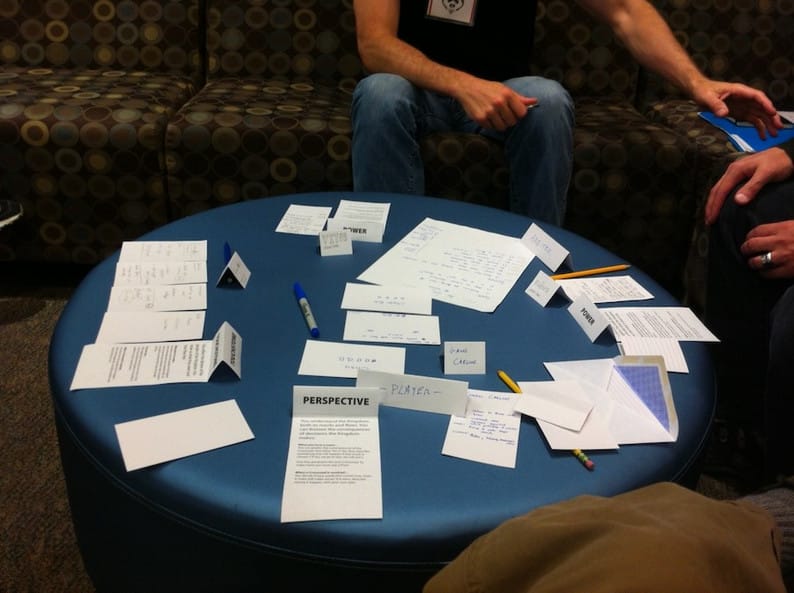
Kingdom by Ben Robbins
Kingdom is a worldbuilding game about how communities can act as smaller worlds within worlds, each with their own entirely unique ecosystems. As well as creating these communities, you’ll be deciding whether they’re able to live up to their initial ideals or if they collapse under the weight of the pressures placed on them by the outside world.
These ‘kingdoms’ can revolve around literally anything; a team of lifeguards patrolling the seas; a group of pizza delivery drivers running a Saturday night shift; an anime afterschool club meeting every Wednesday evening; or a band of settlers arriving on the shores of an uncharted island. You can explore all manner of themes and story ideas on a smaller scale with Kingdom, playing out a complete narrative between the characters within your chosen community.
Playing Kingdom will be extremely useful if you want to learn how to craft elements like organizations, cities, and factions: or the worlds within worlds.
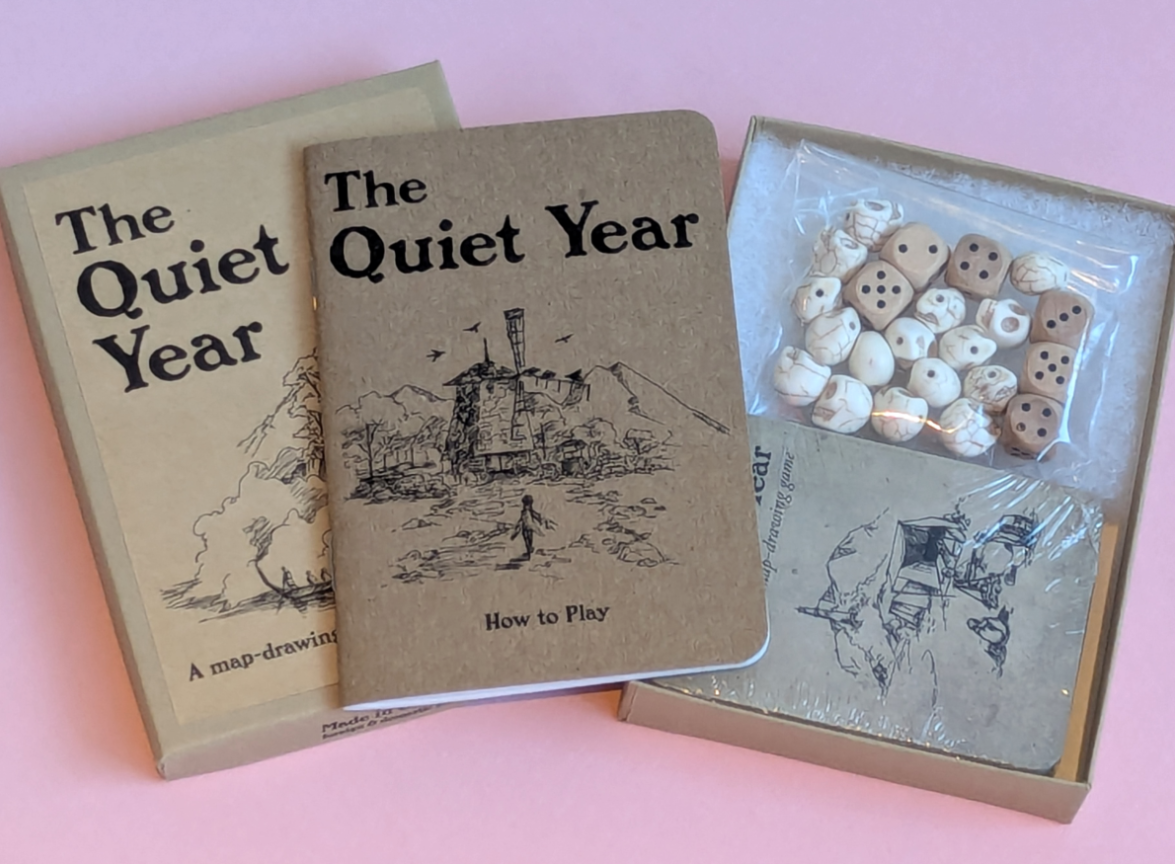
The Quiet Year by Avery Alder
The Quiet Year is a map making game wherein you tell the story of a community attempting to survive in a world reeling from the collapse of civilization itself.
This collaborative worldbuilding game is played using 52 cards, with each card corresponding to an event or events that took place within a single week in the recorded year. What events occur in that week will depend on the suit and number of the card drawn. These events will often reflect the changing availability of resources in the world, forcing the community to adapt and compromise in response.
These choices are reflected in a map which you’ll gradually fill out with various features. By the end of the game, you’ll have a complete map that can either serve as a great source of inspiration, or even as a usable asset for your world.
Playing The Quiet Year will help you understand how map-drawing can tell stories about your world: such as through the sites of battlegrounds, the contrast of wealthy and poor areas, the placement of government buildings, etc…
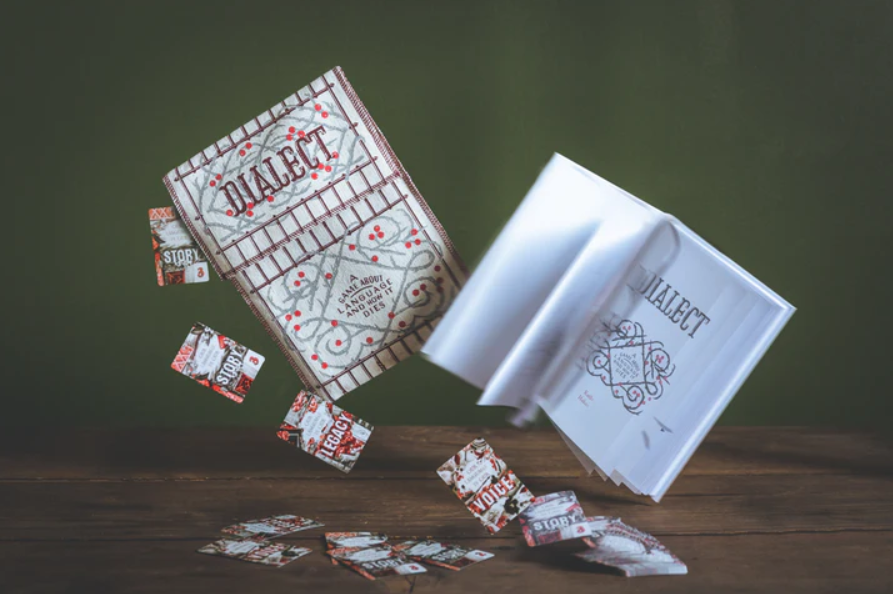
Dialect by Hymes & Seyalioglu
Dialect is an indie game that approaches worldbuilding from an especially fascinating angle - language. This TTRPG has players creating their own original language for an isolated community, with each word in the language deriving solely from the core elements of this society. Over the course of the game, your language will grow and change, reflecting the evolution of the society who uses it.
Players start the gameplay by devising three key aspects of the community, each of which will inspire the creation of new words and the alteration of existing ones. As the society’s relationship with these beliefs change - alongside their everyday lives - their language will change along with it, which is then recorded in the dialect they use.
Playing Dialect will teach you how to use cultural elements - like languages - as a worldbuilding tool to illustrate important themes and ideas in your world, as well as show how societies can change over time.
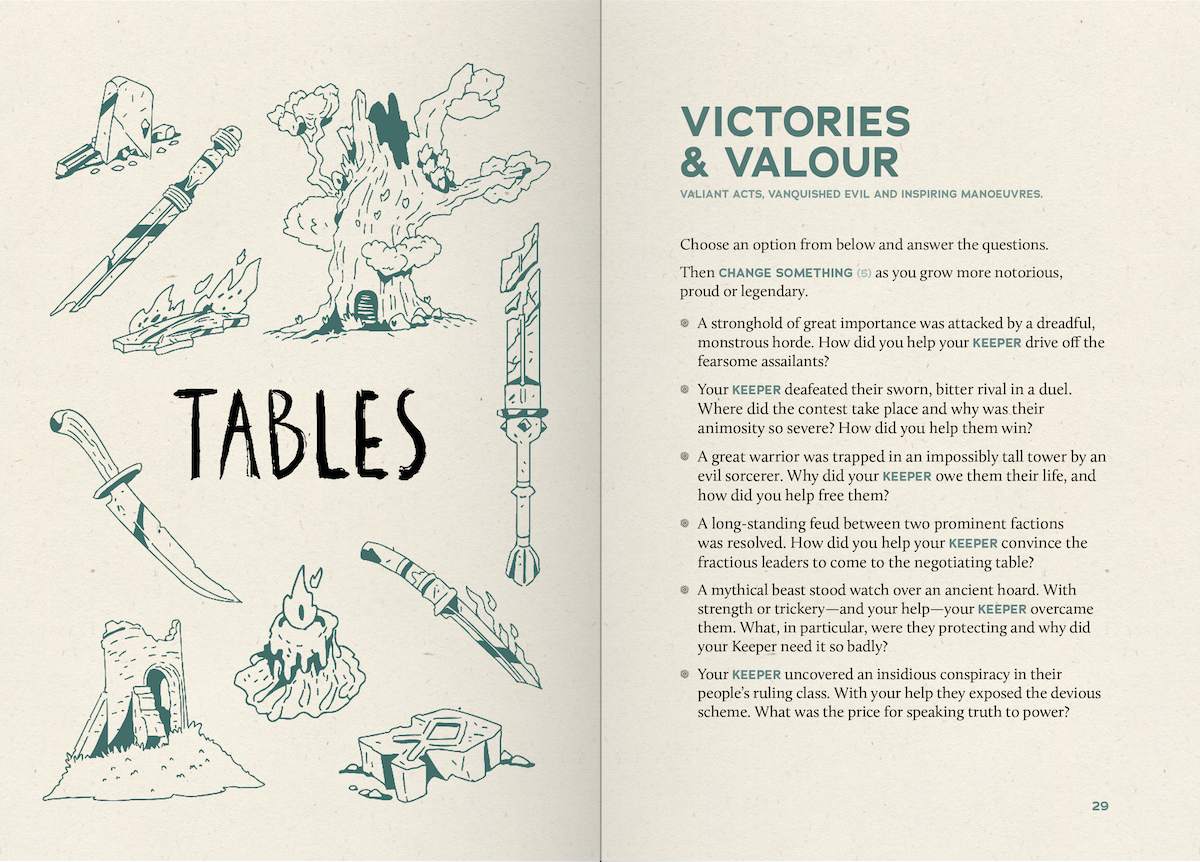
Artefact by Jack Harrison
Artefact is a game that enables players to create backstories for the kinds of items and weapons adventurers might find in a dungeon-crawl, turning a very standard part of classic roleplaying into its own worldbuilding game. By giving these otherwise unremarkable treasures their own origins, the players transform them into storytelling devices - letting their creators, previous owners, and past deeds shape the world in which they were made and used in.
You start by choosing from a list of possible artefacts - from weapons, to musical instruments, to books - before giving it a name, drawing an image of it, and identifying its key properties. Additionally, you’ll imagine its creator and their original motivation behind making this artefact, regardless of what it’s actually been used for. Beyond this point, the players will create one or more Keepers (or owners) of the artefact, and imagine the scenarios it was used in.
Not only is playing Artefact a great worldbuilding exercise in-and-of-itself, it will also allow you to create richly-realized weapons and items for players to find and earn in your own RPG world and campaign.