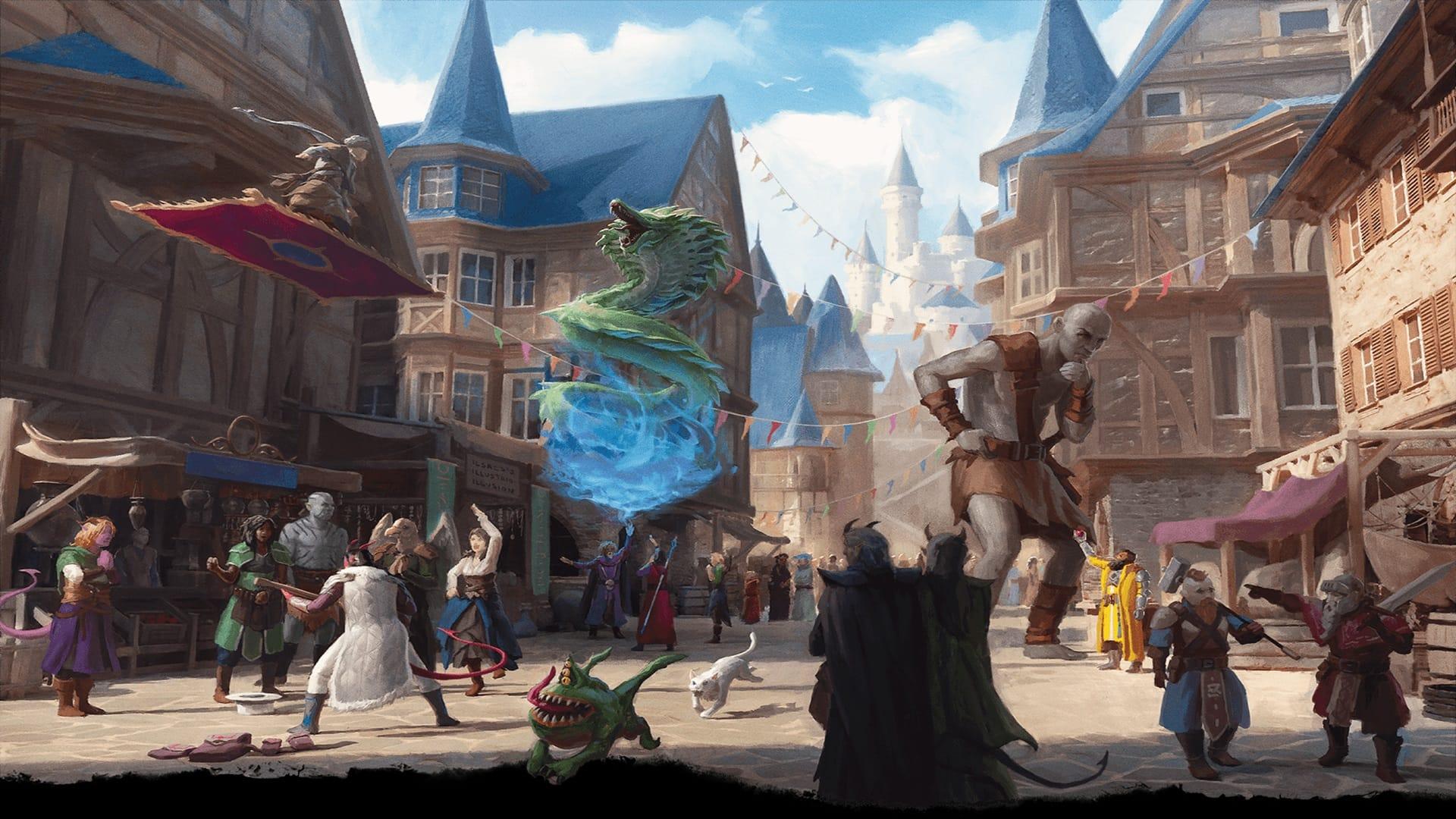
If you’re interested in creating your own original fantasy world for your next Dungeons & Dragons campaign, then you might be wondering how best to approach worldbuilding. Before you dive into the step-by-step creation process, you should take the time to internalize some good writing tips to avoid making common mistakes.
- Don’t try to create your world all at once
- Make what you need first, the rest can come later
- Utilize official and homebrew DnD content
- Pay attention to what your players are interested in
- Don’t be afraid to make major changes to your world
Though the most important rule of a worldbuilding guide is to always let your imagination lead you, that doesn’t mean it’s not helpful to keep a few worldbuilding questions in mind to guide you.

Don’t try to create your new world all at once
One incredibly common mistake you might fall into as soon as you begin worldbuilding is to try and create your entire fictional world all in one go. It might be tempting to do this, but not only is it exhausting for your imagination - leading to moments where you might force bad ideas into existence - but also a poor way of approaching the worldbuilding process for Dungeons & Dragons.
D&D is a high fantasy game that’s driven by your players’ decisions as much as your own ideas. This means that if you think too far ahead, you might end up creating something your players don’t even find, which can be really disappointing and demoralizing.
A good worldbuilding basic is to start from an element or a handful of fantastical elements that you’re particularly inspired to create. Maybe you’re particularly interested in making your own belief systems, or the world’s history of a certain region, or the map of a single town (all things you can easily make with LegendKeeper). Once you get playing, you can then develop these fantastical elements further.

Make what you need first, the rest can come later
This is possibly the most important worldbuilding basic fiction writers can take on-board: focus on what you need for your campaign first, and the rest can come later. Your worldbuilding should be driven by the Dungeons & Dragons campaign you’re creating it for, meaning that you have to make sure you’re making elements that can be used whilst actually running the game.
This can be a city, town, or region map, or non-player characters, establishments, organizations, and, crucially, plot threads to follow. You can then further develop elements around these or flesh them out with history, lore, natural resources, magic systems etc… but they have to actually exist first.
A good step-by-step guide is to start with a single village, mapping out its landscape, key inhabitants, and important points of interest. Then you can grow this either with more details, or build it outwards into an entire region filled with other villages or towns/cities/settlements, then even a full continent if you want. But always prioritise what players will be interacting or engaging with first, then consider your backstory.

Utilize official and homebrew DnD content
Official D&D and homebrew, or fanmade, content from other fantasy writers can provide a solid foundation for your campaign worldbuilding. Making an original world doesn’t mean you can’t take inspiration or certain elements from existing worlds, though try not to simply rename an entire world and call it a day - that’s not really fantasy worldbuilding.
There are lots of ways you can transform or build on elements from other worlds from other fantasy authors to create your own. One example is to take an existing concept and transform it to fit into your world, like a species of people who are the offspring of an otherworldly being (like DnD’s Tieflings), but this time it’s interdimensional creatures who can travel between worlds.
Another option is to take fantasy writing like the character of Count Strahd from the Curse of Strahd adventure, and build your own original world and campaign around it. Perhaps this time, Strahd is a lesser evil in a world filled with even more powerful monsters, and the players will need to team up with him. This worldbuilding basic will offer a minor shortcut or template on the way to you creating your own high fantasy/Tolkien/George RR Martin-esque world.

Pay attention to what your players are interested in
You might already have some set ideas in mind for your world and campaign, but paying attention to what your players are interacting with is an essential worldbuilding basic. Worldbuilding for a fantasy novel, film, or video game is an entirely different process than creating an RPG world, as you’ll have the opportunity to test elements with your players mid-creation.
A great way of doing this is to introduce a selection of potential plot threads for them to follow: maybe some rumours, an NPC who needs help, a discarded letter, or pathway on a map. Whichever they choose presents an opportunity for you to worldbuild around that plot thread. For instance, that NPC might have been a minor character to begin with, but now they could become a beloved main character whom the players regularly interact with.
Your worldbuilding should be driven by your players’ interests as much as your own, whether that’s creating breadcrumbs for them to follow or further developing an element they’re already invested in.

Don’t be afraid to make major changes to your world
Once you’ve created something more substantial, it might feel like most of the major work is done - with only minor additions and alterations needed. However, one great worldbuilding basic to adopt is to be willing to make drastic changes to your world, even if it feels mostly complete. Sometimes, you have to be willing to kill your darlings to create something even better.
Consider how your players’ actions might have a dramatic effect on your world. Perhaps their meddling in a dystopian world leads to a major revolution, with cities being overrun by a rebellious faction. Maybe their decision to kill a local monster leads to the ecosystem of a region being completely disrupted, with an invasive species running amok. You could even destroy entire swathes of your world, whether through natural disasters, manmade events, or otherworldly means.
A good DnD world should feel dynamic and responsive, rather than constant and set in stone. If you view your worldbuilding as a continuously ongoing project, and take opportunities to make changes, then your players will undoubtedly benefit as a result.